




.png?width=300&name=ChatGPT%20Image%20Sep%2012%2c%202026%2c%2001_05_12%20AM%20(3).png)
Corrosion Under Insulation
.png?width=300&name=ChatGPT%20Image%20Sep%2012%2c%202026%2c%2001_05_12%20AM%20(2).png)
.png?width=300&name=ChatGPT%20Image%20Sep%2012%2c%202026%2c%2001_05_13%20AM%20(4).png)
.png?width=300&name=ChatGPT%20Image%20Sep%2012%2c%202026%2c%2001_05_12%20AM%20(1).png)
.png?width=300&name=ChatGPT%20Image%20Sep%2012%2c%202026%2c%2001_05_13%20AM%20(5).png)


Shahbaz AkramNov 27, 2024, 8:38:11 PM
Corrosion Under Insulation (CUI): Challenges, Risks, and Modern Detection Solutions
The Hidden Challenge of Corrosion Under Insulation (CUI)
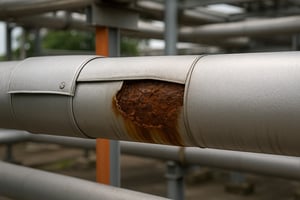
Corrosion Under Insulation (CUI) is a major concern for industries such as oil and gas, where insulated pipelines, tanks, and vessels are integral to operations. This type of corrosion, often hidden from view, presents significant challenges when it comes to detection and management. The localized nature of CUI makes it especially difficult to identify, posing potential risks to safety, asset integrity, and operational efficiency.
Understanding the Threat of CUI
CUI arises when moisture seeps into the space between the insulation material and the metal surface of industrial assets. This creates an environment ideal for corrosion. Common sources of moisture include rainwater, condensation, steam leaks, and deluge systems. Additionally, external factors like thermal cycling and contaminants such as chlorides can accelerate the corrosion process.
What makes CUI particularly dangerous is its stealthy nature; it often goes unnoticed until the insulation is removed or advanced nondestructive testing (NDT) methods are used. Left undetected, CUI can result in severe consequences such as environmental contamination, hydrocarbon leaks, unplanned shutdowns, and even catastrophic structural failures.
Challenges in Inspection and Maintenance
Managing CUI comes with a unique set of challenges:
-
Accessibility Problems: Insulated assets are frequently located in hard-to-reach places. The process of removing insulation for inspection can be labor-intensive and expensive, particularly when scaffolding or heavy machinery is required.
-
Detection Limitations: Traditional visual inspections, although commonly used, fail to provide a complete picture of asset health. Spot checks or localized inspections may miss critical signs of damage that could worsen over time.
-
Technological Gaps: Existing detection methods often lack the precision needed to detect CUI in its early stages. Many of these technologies are not specifically tailored to address the unique conditions of CUI. The industry requires integrated solutions that combine various testing methods to enhance detection accuracy.
-
Economic and Safety Concerns: The cost of removing and reinstalling insulation can be substantial. Moreover, some inspection techniques, such as radiography, pose safety risks due to radioactive exposure.
Innovative Solutions to Combat CUI
To address the growing problem of CUI, the industry is turning to innovative solutions that integrate advanced technologies. These include:
-
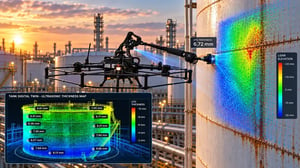
Multimodal NDT Techniques: By combining methods such as ultrasonic testing, thermal imaging, and pulsed eddy current systems, companies can gain a more comprehensive understanding of asset conditions, improving detection capabilities.
-
Predictive Analytics & Risk-Based Assessment: Utilizing predictive tools and risk models can help identify areas at high risk for CUI damage before it becomes critical, allowing for more proactive and cost-effective maintenance.
By improving detection processes and adopting cutting-edge technologies, companies can enhance safety, reduce operational costs, and extend the lifespan of critical assets. While CUI remains a significant challenge, the future looks promising with continued innovation and collaborative efforts within the industry.
Conclusion
CUI continues to be a major obstacle for industries reliant on insulated assets. However, the integration of advanced detection methods and predictive technologies offers a path forward. By embracing these innovations, industries can mitigate the risks associated with CUI, improving asset integrity and operational reliability in the long run.
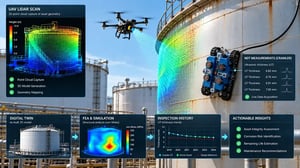
At CUINSPEC Ltd., we are developing advanced robotic and NDT-based solutions to detect and monitor CUI without removing insulation. Our approach integrates intelligent inspection systems with data-driven insights to improve safety, reduce downtime, and optimise maintenance strategies.
COMMENTS